- Home
- Products
- Knowledge Base
- Sales
- Customer Support
- Contact Us
- Order Desk: 866-216-8700
Welcome to ASD! Call us at 866-216-8700 to place your order today.
 |
Alcohol Methodologies |
|
|
Friday 19 July, 2013.
 |
|
|
Several different methods are available for alcohol testing. Alcohol test can be done via blood draw, breath, urine or saliva and recently hairs. Blood Alcohol TestingBlood Alcohol Concentration (BAC) is considered to be the standard for measuring the degree to which an individual is impaired by alcohol. For years, studies have shown that there is a direct correlation between the blood alcohol concentration and the degree to which reactions and judgments are impaired. The methodology used for blood alcohol testing is Gas Chromatography and is the most accurate forensic quality test in the industry today. However, drawing blood is an invasive and expensive procedure that most companies prefer to avoid.Breath Alcohol TestingIt is well proven that there is a direct correlation between a person's blood alcohol concentration and his breath alcohol contents. During respiration, gas is exchanged from the lungs to the blood- primarily oxygen during inhalation, and C02 during exhalation. During this exchange, alcohol in the blood vaporized and crosses the lungs membrane into the exhaled breath. There are several types of breath alcohol testing devices available today. These range from disposable screening testers to the equipment that provides legally admissible test results, or devices ideal for screening purpose by companies as well as individuals. These types of testers fall into three categories:
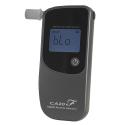
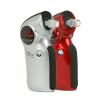
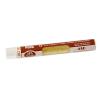
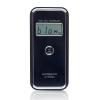
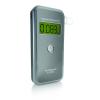
The evidential breath testing devicesare generally expensive (costs range from $3000-$5000 per unit), require routine calibration maintenance, and costly repairs. Calibration, and operation of this class of devices require specially trained and certified personnels. Attachments such as sterile mouthpieces must be used each time a test is performed. These alcohol breathalyzer units are large table top machines calibrated for use in one location. Movement and environmental changes can effect the calibration parameters and settings which calls for recalibration.The Portable Hand Held Dprovide fairly accurate test results suitable for screening purposes. By measuring the alcohol content in the breath, a reliable indication of the blood alcohol level is achieved. Portables devices are less accurate than evidential devices, however by comparing the cost performance ratio, these devices are affordable and sufficient for personal and corporate screening use. Most potable devices are not evidential and not admissible in the court of law.The Disposable Devicesare noninvasive, and non scalable methods of screening for alcohol. Can be used to detect the presence of alcohol with an estimate to the degree of impairment. Being disposable, they are the safest way of testing for alcohol. The disposable devices operate based on a known chemical reaction that is highly sensitive to alcohol and less sensitive to other gases. Unlike the semiconductor based alcohol testers, the disposable devices are less likely to produce a false positive result.Here's How The Disposable Breathalyzers WorkThe disposable breathalyzer test is an accurate way to measure BAC. The breathalyzer test analyzes the ethyl alcohol in the blood that escapes through the lung tissues into the exhaled breath. The presence of ethyl alcohol in the breath is detectable by a color change of very sensitive chemically coated crystals encapsulated in the tester. Immediately prior to use, the ampule is ruptured by slight finger pressure on the outer flexible and tube to release the crystals within the confines of the ampule. When the subject exhales through the tube, crystals reacts to the breath alcohol molecules and change color from yellow to White/greenish blue (aqua) if alcohol is present. If all the crystals change color completely from yellow to light blue or white to many eyes, it indicates that the subject's blood alcohol level is exceeding the tester preset threshold level indicated on the label.).02, .04, .05, or .08% BrAC.Urine Alcohol TestingAlthough urine alcohol testing will indicate the presence of alcohol in a person's body, it will not indicate an individual's current condition. Once consumed, alcohol enters the blood through the stomach wall within 15 minutes, causing immediate impairment. It is then metabolized by the liver enzyme and, after 1½ to 2 hours, it will begin to show up in the urine. Therefore, urine alcohol does not measure a true condition of the person. The results indicate the person's condition several hours before.Additionally, urine alcohol concentration does not directly correspond to blood alcohol concentration. Urine alcohol level varies depending on the person's metabolism and the amount of fluid in his system. For instance, a person who is slightly dehydrated will tend to have a higher alcohol concentration in his urine than someone who has a normal level of fluid in his system. At least one study has indicated that a false positive for urine alcohol can occur. High levels of sugar and acetone in the body can cause fermentation in the urine, creating a false positive for urine alcohol. All things considered, the urine alcohol test is the least preferred or perhaps accurate method available for alcohol testing. It is worthwhile to read a supporting research paper published in THE AMERICAN JOURNAL OF CLINICAL PATHOLOGY: ERRORS OF CONVERTING A URINE ALCOHOL VALUE INTO A BLOOD ALCOHOL LEVEL. SIDNEY KAYE, PH.D., AND EDUARDO CARDONA, M. S. |
|
 |
|
|
|
|
|
|