- Home
- Products
- Knowledge Base
- Sales
- Customer Support
- Contact Us
- Order Desk: 866-216-8700
Welcome to ASD! Call us at 866-216-8700 to place your order today.
 |
Why Carry a Compass? |
||||
|
Tuesday 22 April, 2014.
 |
||||
|
Even in this era of satellite-assisted navigation (GPS), a compass and map remain essentials of outdoor travel. True, you may hike for days on a trail and never look at your compass, yet if you take a wrong turn or a whiteout blows in, a compass in tandem with a map suddenly becomes one of the most important tools in your pack. The ability to navigate with a map and compass is a crucial skill, especially if your travel off trail. Take the time to learn it- someday it might just save your life. ASD has experienced and trained sales specialist who can answer many of your compass questions. Needle Compass
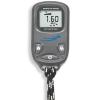
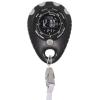
Basic needle compasses are a good choice for beginning adventurers, day hikers, and backpackers who stick to the trails. If you travel off trails or deep into the backcountry, look at advanced models. These compasses will have features such as sighting mirror, declination adjustment, map scales, Magnifying lens and more. Compass FeaturesBezel Degree Intervals: Most compasses have rotating outer ring called "bezel", with degree marks from 0°-360°. For both basic and specialized models, the smaller the interval of degrees on the bezel, the more accurate your bearings will be. Global Needle: Useful to adventurer who explore in the southern hemisphere. Due to variances in the earth's magnetic field, a needle compass designed to spin freely in North America may tilt or drag on other parts of the world. Compasses with global needles compensate for these variances and spin freely and accurately anywhere on the globe. Sighting mirror: A mirror improves your ability to make more precise reading. When the mirror is partially fold open, you can sight through a notch in the top. This allows you to simultaneously see your bearing and sight on a distant landmark. It also act as an emergency signaling device. Declination Adjustment: A compass needle points to magnetic north, not true north. This difference is known as "magnetic declination". An adjustable declination arrow let you preset this value, which simplifies navigation. Some Compasses feature a fixed declination "scale" in their base plates, which allows you to make a quick adjustments. Tool-free declination adjustment makes the process easier when you are on the go. Clinometer: Found on some compasses, it measure vertical angles and is used to determine slopes steepness or the height of an object- a tall tree or a building. Ruler: Used in conjunction with map scales, it enables you to quickly calculate distance. Map Scales: Used to calculate distances on maps, making navigation a little faster. Most U. S. Geological survey maps use a 1:24,000 ratio, measuring 1 unit on the map equals 24,000 units on the ground. For example 1" = 24,000" , or 2000' or approximately 3/8 of mile. At 1:100,000, which less topographic detail, 1" = 100,000", or 8333'. about 1.5 miles. Liquid Filled: In the needle housing, a non freezing liquid is often used. The liquid slows a needle's jiggling and brings to rest quicker than an air-field housing. At high elevations or in cold temperatures, the liquid may contract and create a bubble. A bubble will not impact accuracy. Bubbles disappear when a compass returned to normal conditions. Other Features: If you often travel at night, luminous cardinal points ( north south east, west) or a luminous bezel are beneficial. A Lanyard (or wrist band) tethers the compass to your wrist; a must for adventure racing or orienteering. A magnifying lens can help you discern map details more easily. Digital CompassesThese compasses offer some of the same features as needle compasses, but their digital displays make them much easier to read. |
||||
 |
||||
|
||||
|
||||
|