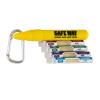
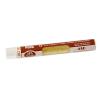
Product Description
 SafeWay is a reliable, single-use, breath alcohol tester that provides convenient, non-invasive alcohol screening at workplace, at home or anywhere you go. Safe Way disposable alcohol testers are available in multiple percentiles to test for various levels of breath-alcohol concentration (BrAC).
Safe Way does not require batteries or costly re-calibrations. Based on a chemical reaction that is not sensitive to any gas other than alcohol, this highly selective reaction to alcohol reduces chance for a false positive result (more common with electronic breathalyzers). Safe-Way's sensitive crystals change color when exposed to alcohol.
Simple to Use
- Wait 15 Minutes after your last alcoholic drink
- Squeeze flexible tube to break inner ampoule and activate crystals
- Blow through the tube for 12 seconds
- See your result in 2~3 minutes
If SafeWay detects the presence of alcohol in an individual's breath, the crystals will change color from yellow to greenish blue.
SafeWay is the perfect disposable alcohol tester for inclusion in your company wellness programs either on its own or as part of larger substance abuse educational event.
Features
- FDA Cleared
- Patented Technology
- Long Shelf Life (2 years)
- .02, .04, .05 and .08 Alcohol Screening Levels
- Disposable and Discrete
- Easy to Use, 4 Simple Steps
- 2 Minute Response Time
- Affordable Alcohol Detection System
- Great For Trade Shows Give Away
- Call for Military Discount
SafeWay is the best disposable breath alcohol tester designed for consumer and professional alike. It is available in four different percentiles ( .02, .04, .05, .08) to test various levels of Breath-Alcohol Concentration (BrAC).
How to Order
| Can be Customized |
Not Customizable |
Not Customizable |
Can Be Customized |
|
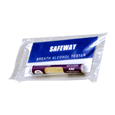
Singles
Testers are individually packaged & sealed with a User's Guide.
|
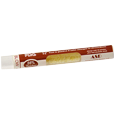
Bulk
Testers are not individually packaged. One User's Guide included with every box of 100.
|
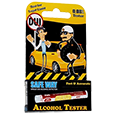
Retail
Retail packaging for store shelves. Each box contains one tester and User's Guide
|
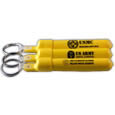
Keychain Breathalyzer
Each keychain carries one tester and instruction manual inside.
|
Specifications
| Size: |
2.75 x .375 x .375 inches |
Accuracy: |
99% |
| Weight: |
0.2 oz (5.7 grams) |
Sensor Technology: |
Alcohol Reaction with Chemically Coated Crystals |
| Blowing Time: |
12 Seconds |
Response Time: |
120 Seconds |
| B.A.C. Test Levels |
0.02, 0.04, 0.05, 0.08% BAC (Blood Alcohol Concentration |
Effective Use: |
Single Use |
| Shelf Life: |
24 Months |
|
|